
In Tanzania – a population of just over 63 million people – more than 50% are under the age of 18, and 63% are under 30. The median age is 17. 69% are considered youth between the ages of 15 and 35. Tanzania has almost exactly the same land mass as British Columbia. Population BC – 5.5 million. In Canada, 19% of the population is between 15 and 30.
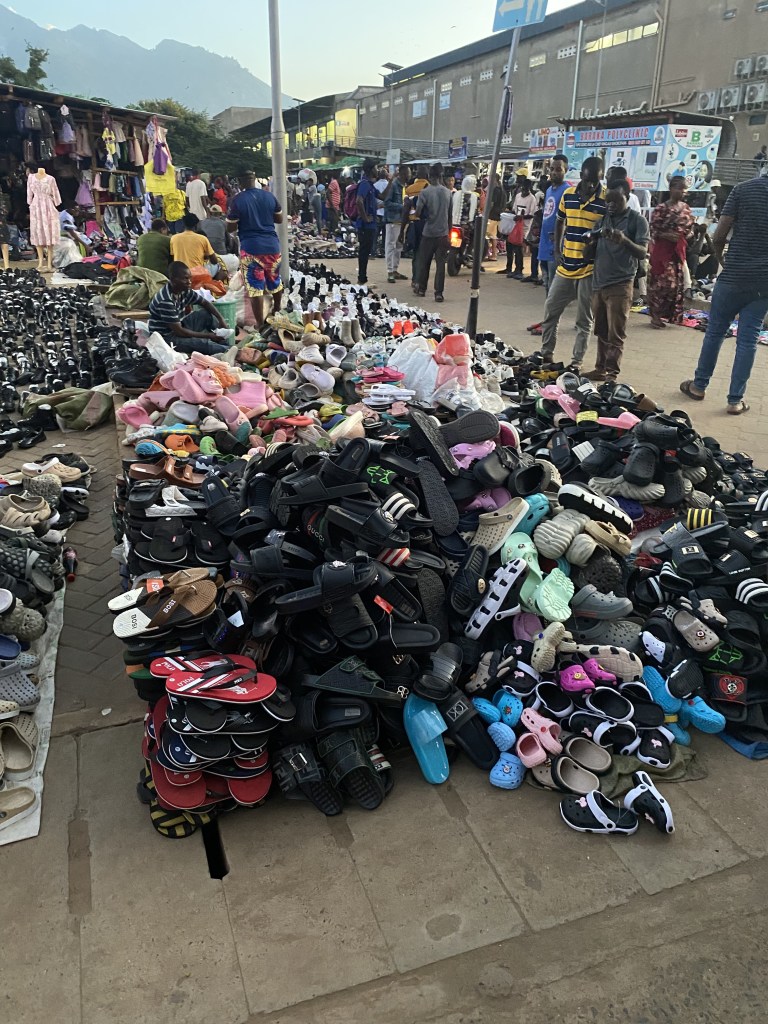
Tanzania is struggling with this bulge in its demographic. Youth are unemployed, or under employed or doing work as a last resort. Tanzanians by nature are entrepreneurial it seems to me. Every youth out of grade school is hustling to make a Shilling. They are out on the corners selling whatever they can get their hands on. Street vendors are out early in the morning as the sun is rising and finish as the sun is setting, And most nights the sidewalks are filled with vendors selling fruits, veggies, cooked food, household items and clothes. Many of the young men end up driving a tuk-tuk or a Boda-Boda (motorcycle) and drive all day ferrying people around.
Young Entrepreneurs

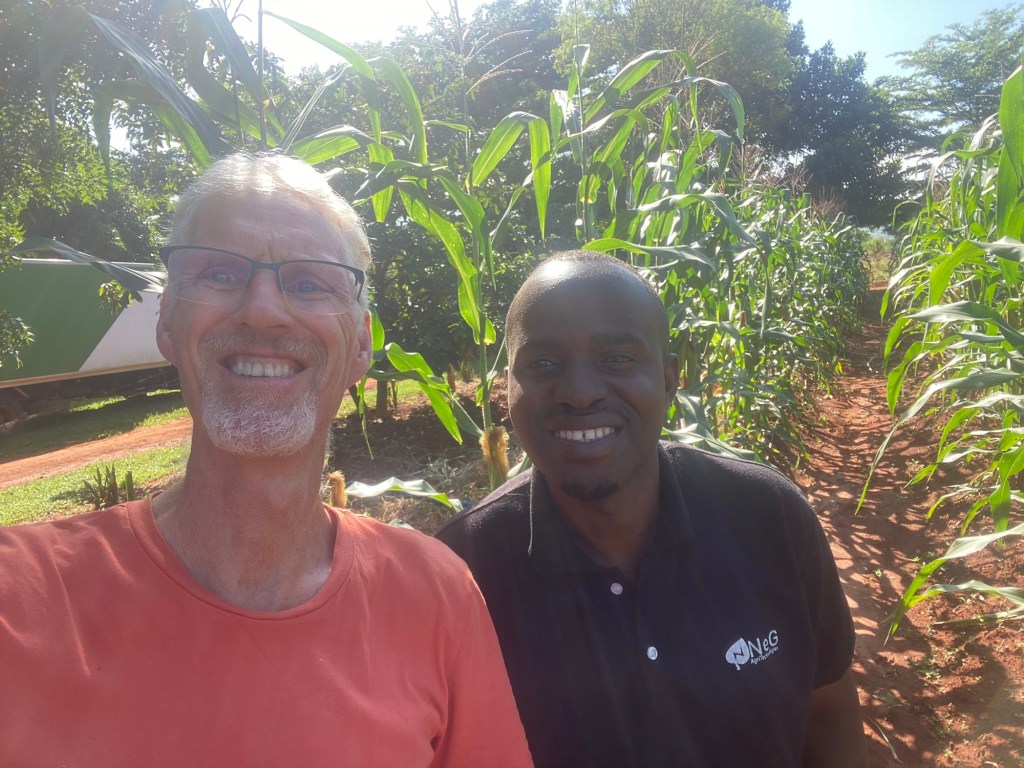
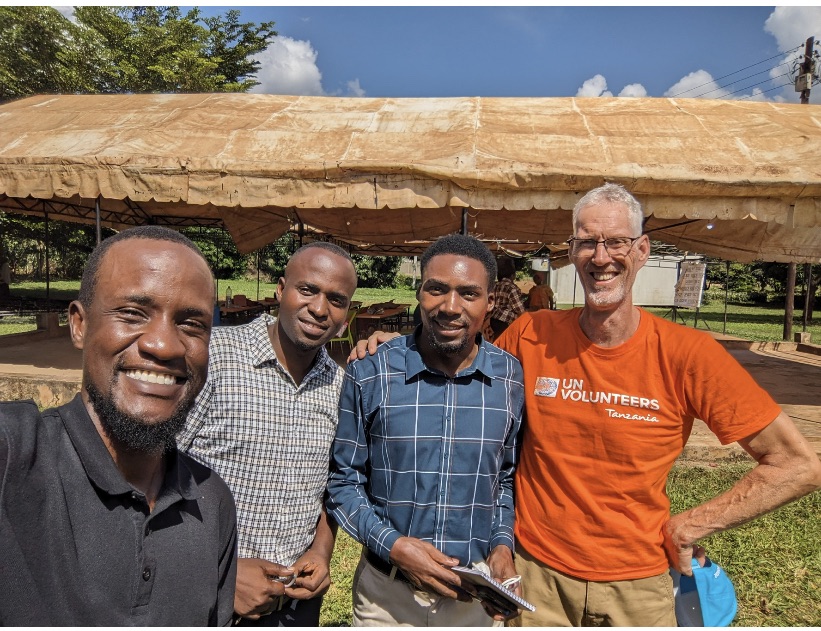
James when in University formed a collective of progressive students and initiated a technology community focused on agriculture, organizing weekly discussions to explore ways of transitioning traditional farming practices into more advanced systems akin to those seen in developed countries. He spent a year in Israel on an agricultural internship where was exposed to irrigation systems and agricultural data collection systems. He returned to Tanzania and started his own company (NeG Agrotechnologies) and smartly involved some technology developers and researchers from the agriculture university here in Morogoro. In just two years he has developed an entire weather station that collects all weather data and soil moisture information, all uploaded to a cloud that can be read on an app on his phone. He also developed a controller to operate automatic drip irrigation systems which is controlled from a smart phone. All of this technology is readily available on the open market but he wants to develop a Tanzanian version that can be built and distributed in Tanzania and all across sub-saharan Africa and make it affordable for small holder farmers across the continent. I have helped him secure some land here at SUGECO where I work, to develop the technology and test it. SUGECO is a hub where lots of new farmers, potential investors and funders come, and he can show off his smart farm technology. I’m also helping him to apply to an opportunity called Builders of Africa’s Future, where if he is chosen he will get business skill training, introductions to Silicon Valley tech investors, mentoring and networking opportunities.
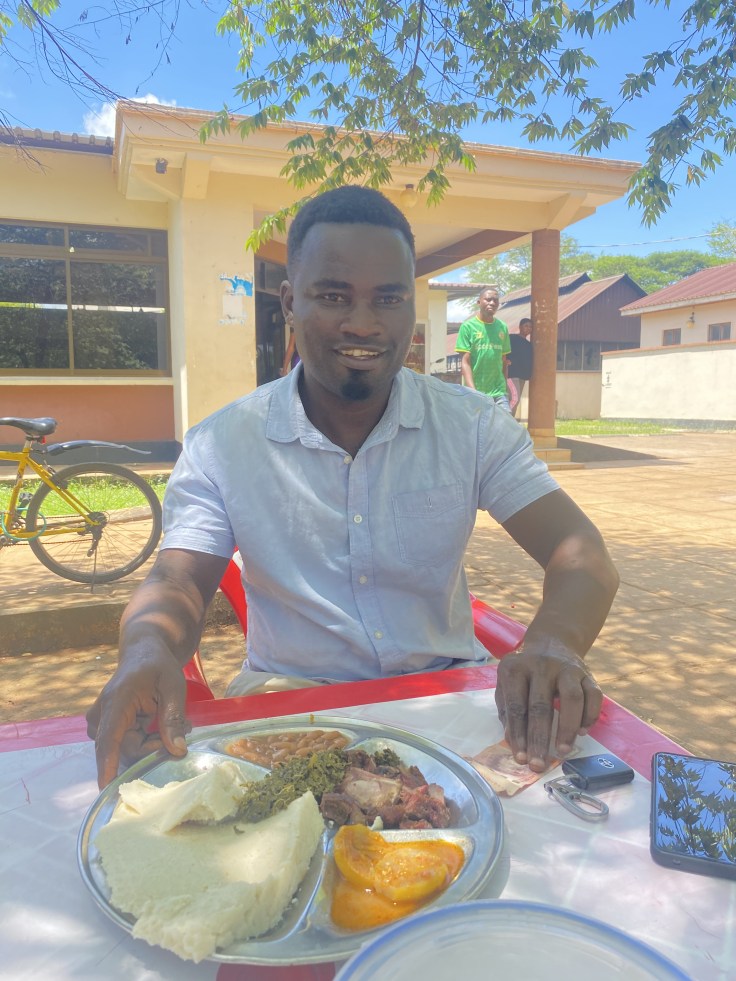
Another young guy, Mkushi, who is an engineer and just finished his Masters in project management already has a business building agricultural structures and systems but he has an idea that could transform the fresh water fishing industry and I’m helping him develop the idea to attract investment. Lake Victoria straddles Tanzania, Uganda and Kenya contains a big fresh water sardine fishery. It is Africa’s largest lake by area, the world’s largest tropical lake, and the world’s second-largest fresh water lake by surface area after Lake Superior. The fishers put their nets out at night from small boats and they take their catch to an island on the lake and dump the catch on the beach. They lay it out there to dry, the product – dried sardines – are sold all over Africa. About half of the catch rots on the beach from contamination or it dries too much in the hot sun or they can’t fish at all in the rainy season because the fish won’t dry. So he has developed a drying system involving greenhouses, drying racks and solar powered heaters. Potentially this could reduce the post catch losses and put more money in the hands of the fishers. I have developed a proposal for him that he has used to attract investment and I am investigating funding opportunities for him.
Some Initiatives
Access to land for young aspiring farmers is a major barrier for youth. There are two major barriers. For those who want to take over the family farm there is a delayed transfer of land ownership to youth due to increased life expectancy of parents (In 1980 life expectancy was 51, in 2023 – 66). For those who aspire to farm and are not from a family farm, lack of capital is a principal obstacle because youth do not have the required collateral to get loan from financial institutions. This is a familiar scenario in Canada. I am working with folks here to develop a land bank with SUGECO where we will facilitate land owners depositing available land that can be loaned/rented out to young farmers and be utilized according to an agreed business model. This builds on land matching programs that operate in BC and all through the States and Europe. Am at early stages on this initiative.
I have also been developing a business development program for aspiring agri-business youth. Many young people have good ideas and want to start a business but really don’t know what to do and how to start. I have been developing a 6 month program where they will learn some basics like market research, writing a business plan, learning capital and financial management skills, branding and marketing techniques, product development and more. With this I am trying to get the Morogoro Chamber of Commerce to participate and have business owners participate with instruction and more importantly – mentor the students. Once again, in early stages. You are probably wondering how does James know anything about business, he has never owned a business. If you are one step ahead of the guy behind you, you can lead him. Plus, I am building this idea through talking to new business owners, bankers and academics who all support the initiative and am relying on their knowledge. I have time. I have instant street credibility here because I am white – its a sad fact but it is a fact.
Other News
The cassava project mentioned in past posts is in delay mode. Nothing more to say at this point. I did all the work and I am waiting for information from managers. Learning to Wait
CUSO is going through a major shuffle. 15% of their budget was cut – the major source of their funding is Global Affairs Canada. Liberals are presenting a balanced budget for 2024 – in preparation for the next election – hence the cuts. CUSO decided last fall that then would have to consolidate operations through all of Africa. The country program manager in Tanzania lost his job but 2 of the other staff in the Tanzania office will still be working. It’s causing a big ripple in the programs and support for volunteers. The guy who lost his job is fine with it, he said he can now focus on what he really wants to do – avocado farm.




 Kilimanjaro Dreams
I love reading your updates. It is looking like you have found your place there and are now doing the wonderful, meaningful things that you had set out to do. James NeG project is particularly interesting. That technology for the everyman could make a huge difference. So would the the dried fish project, so would the land management project… wow, keep up the good work. Nina
LikeLike
Hey Nina. Yes it’s starting feel like I can see where I can be of use. Someday Quinn will feel that way about me :). Elbow in the ribs to the old man.
LikeLike
Hi James. It is very interesting to read your updates. I am following you and trying to catch-up with work left behind. Reading your posts have been a motivation for me. It looks like you are getting your pathway in Tanzania. I am feeling the same here in Colombia, although it has been an uphill journey for me to re-settled after 40 years of being away from the country. Anyways, I am working on a Community-based eco-turism initiative here called Kasa Travel amongst other things. I would like to see you and all the fellows I met in Ottawa coming here and experiencing the Pacific sea, mangroves, the afrodescendant culture (so left behind for many years in this country) and contributing to ameliorate the effects of climate change. Take care and best regards, Eduardo
LikeLike
Hi Eduardo, Its so great to hear from you! I’m sure Columbia is nothing like it was 40 years ago, but I’m happy you are feeling like you are making some progress. Your eco tourism initiative sounds super interesting. We should have a SKWID retreat there at the end of our placements! I did not know there was a population of Africans in Columbia. Did they arrive there as slaves like the USA? I hope you are connecting to family and old friends. All the best to you Eduardo!!
LikeLike
Love your stories and photos James. I was pleasantly surprised by the ending of this one, mainly because it’s good to hear that when one door closed another opened for your program manager but also because avocados are one of my favourite foods. Take care.
LikeLike