
Eating has been a challenge for me. I very rarely feel like I have satisfied my palate.
For many months I could not figure out what was safe to eat. Early on I had several bouts of traveler’s diarrhea/food poisoning but now I think my gut bacteria has changed somewhat. Yet it is always an act of faith eating because getting sick from food is normal, even for Tanzanians. The other day a Tanzanian friend got typhoid, most likely from salad washed in tap water.

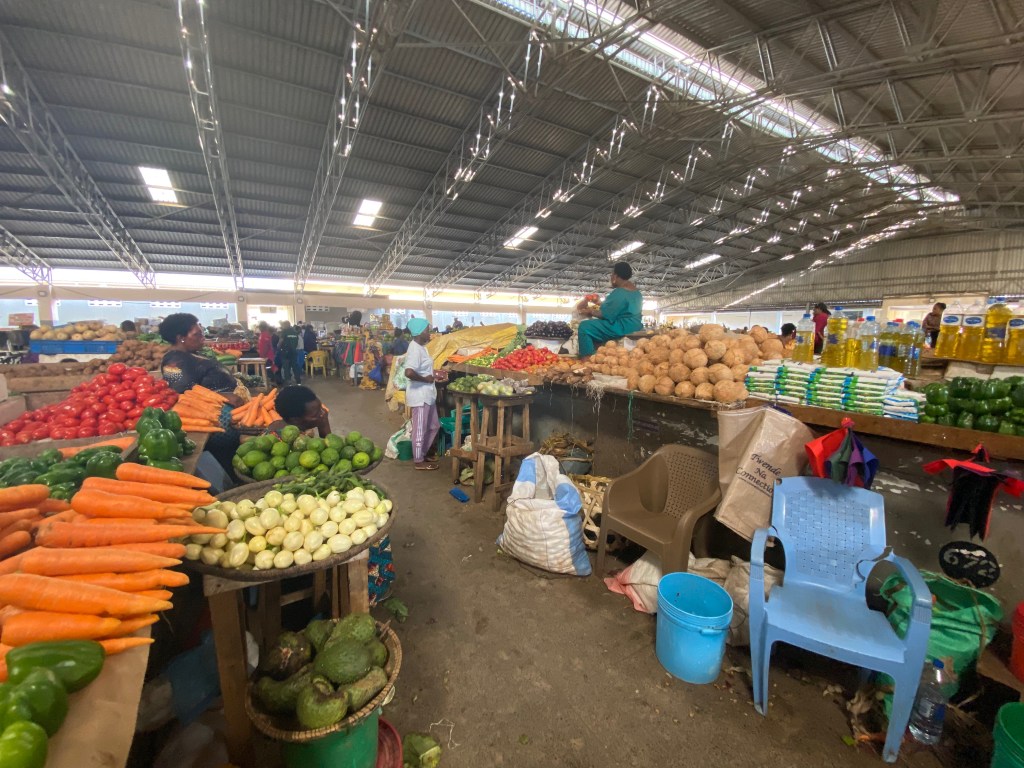
Food is everywhere. Fruit and veggies are sold in road side booths and every night women put down tarps and sell what they are growing. In Morogoro, there is a huge permanent market where all kinds of food is sold. For reasons I cannot explain to you or myself, I have not figured out my food situation. I haven’t gotten into cooking and can never figure out what to cook.
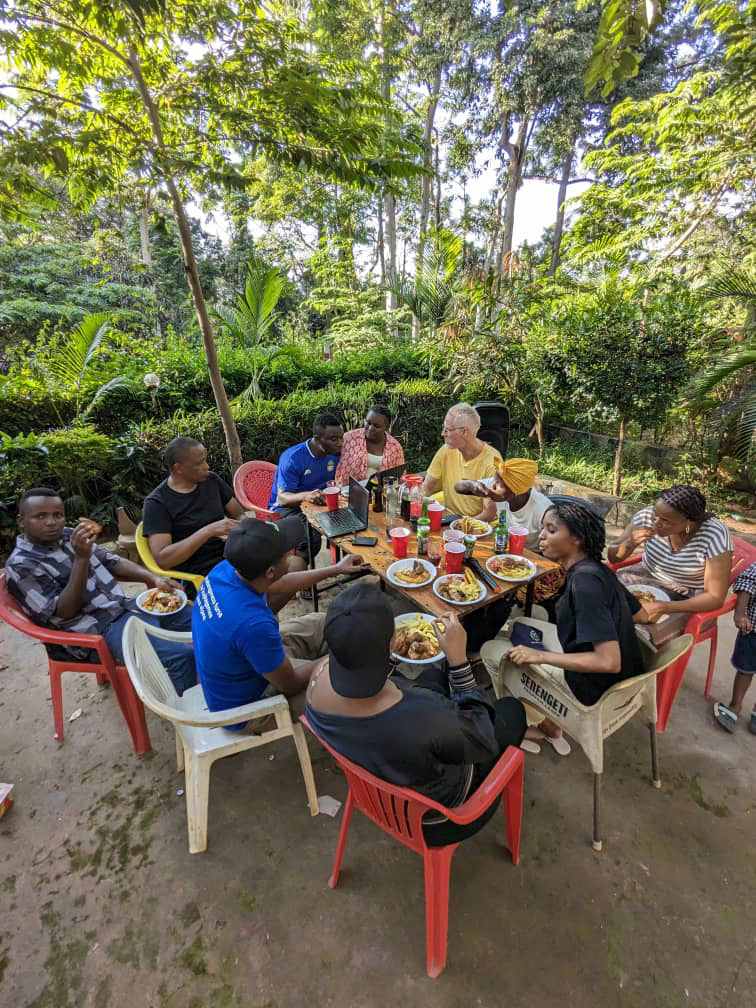
Recently I was a BBQ party. Several weeks prior to the event, the organizer created a whatsapp group for invitees. Deciding on the menu took many days of texting, more importantly how much money they were willing to spend. At the core of the discussion was the cost of the goat to be slaughtered. Everyone knew somebody who knew somebody who had a goat. Eventually an appropriately priced goat was chosen.
The party started mid-afternoon and preparing the food together started before I arrived. Initially they wouldn’t let the mzungu (white man) do anything so I wandered around watching.
In the corner of the large compound were several guys butchering the goat – men’s work. They were chopping it into pieces with a machete on a rusted piece of corrugated metal. Flies and ants were very excited.

There was a pervasive odour of blood and shit. One of the guys was cleaning out goat intestines with a garden hose and a bucket. Together they were laughing, chopping and squeezing shit out of rubbery intestines.
Meanwhile, in another area the women were chopping vegetables. Nobody uses a cutting board, instead vegetables are cut by holding the veggie in one hand slicing it against the palm. One of the women handed me a potato to cut into chips (French fries) and the women all laughed as I struggled to cut using her instructions – of course I was used to cutting on a board.
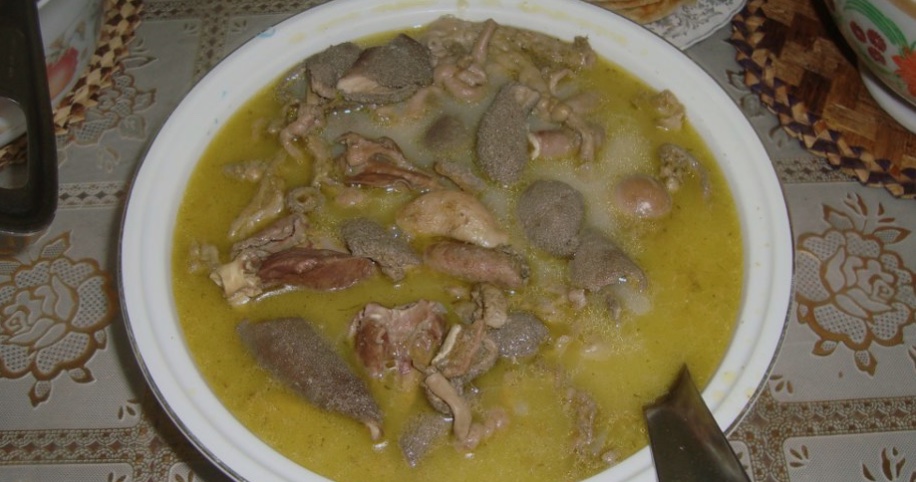
Eventually, the first dish was ready – utumbo – intestine soup. Without knowing, I was the guest of honor – mzungu – and was handed the first bowl of soup, clear goat broth with those same beige intestines I saw recently. They all watched as I took my first sip feigning appreciation and praises to the cook. When eyes were off me, I handed the bowl to my friend and quicky took a good slug of beer.
Tanzanians love meat. Meat is cooked everywhere and men claim if you don’t eat meat, you are not a man. I regularly go to a cafeteria near the farm where I can get chips mayai. This is French fries mixed with a couple of eggs, cooked on a grill in a small pan – a French fry omelet. One of the guys I go with reminds me that I am eating women’s food, with the caveat, “for you mzee (old) it is ok.”
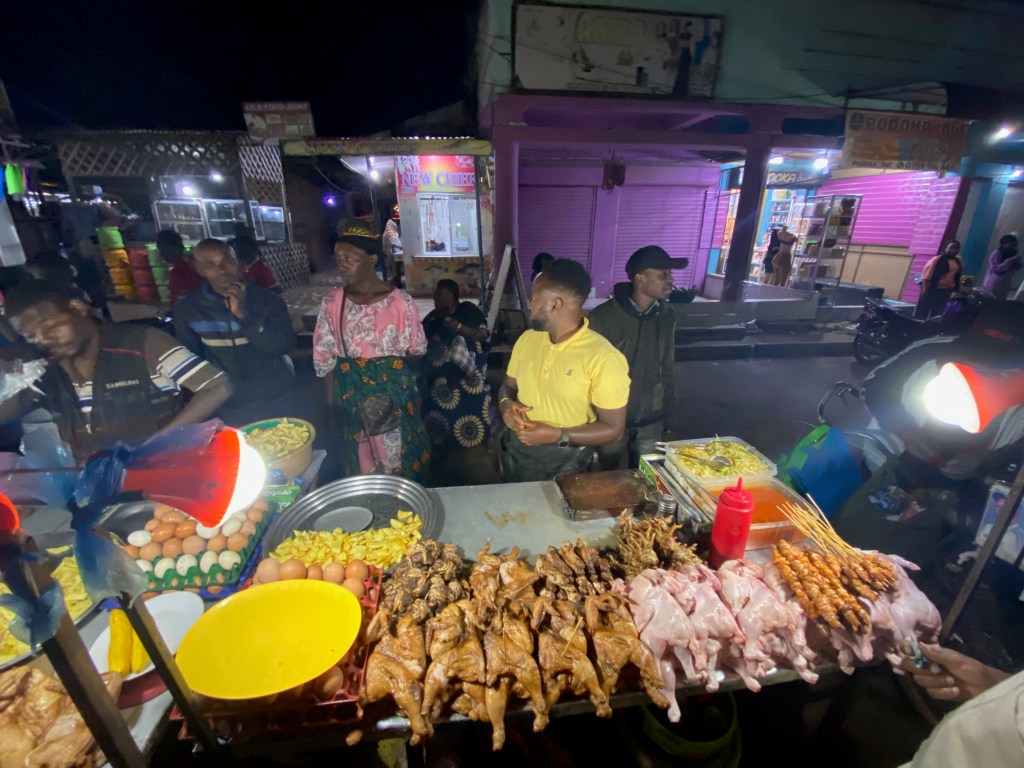
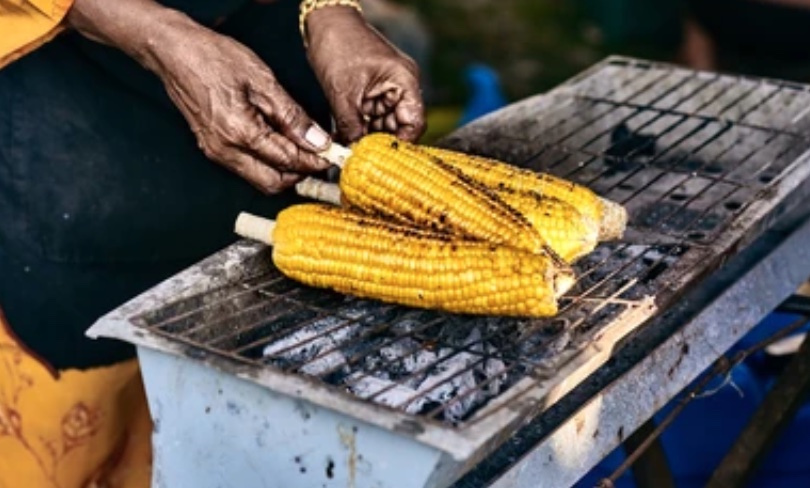
The go to fast food here is mishkaki and is cooked everywhere. Mishkaki is skewered chunks of beef, sometimes chicken, bbq’d on a grill. Everywhere there are booths with chipsi (French fries) cooked in large woks filled with sunflower oil along with small charcoal grills to cook mishkaki. Chipsi and mishkaki are always available – meat and potatoes.

Most local food establishments do not have menus because there are only a few dishes available. The standard fair is grilled, deep fried or roasted meat, deep fried or boiled bananas, overcooked stewed vegetables, cooked beans and some kind of overcooked green. Most times there is also some kind of tomato sauce and pilli pilli (habearo pepper sauce) on the side.
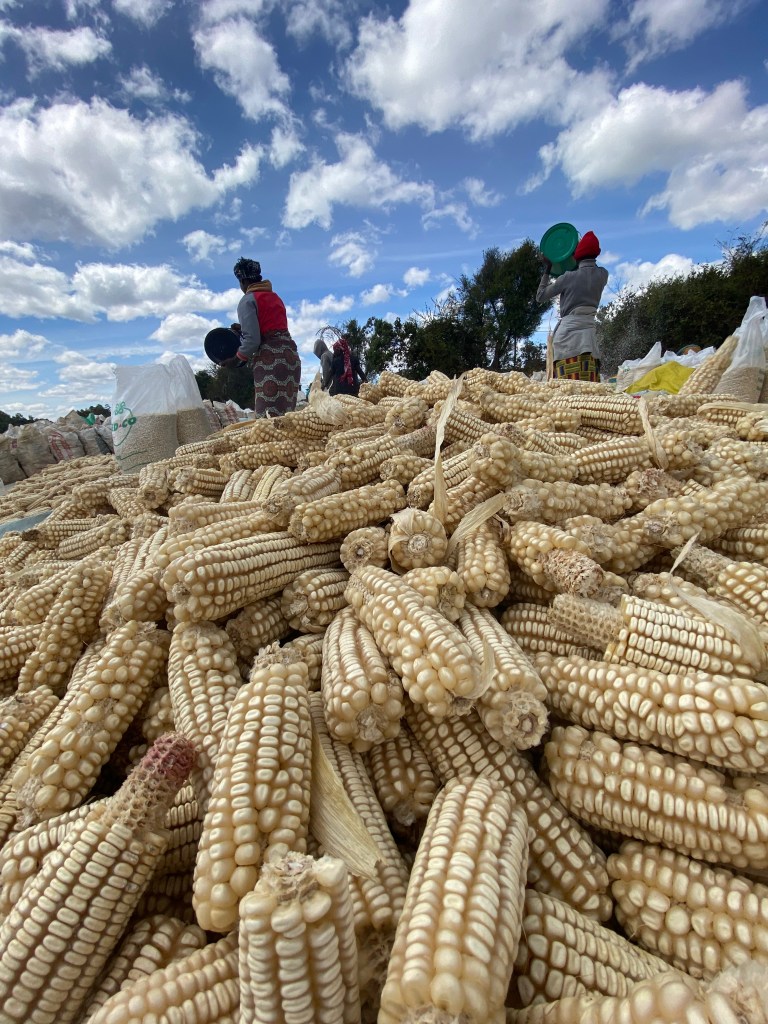
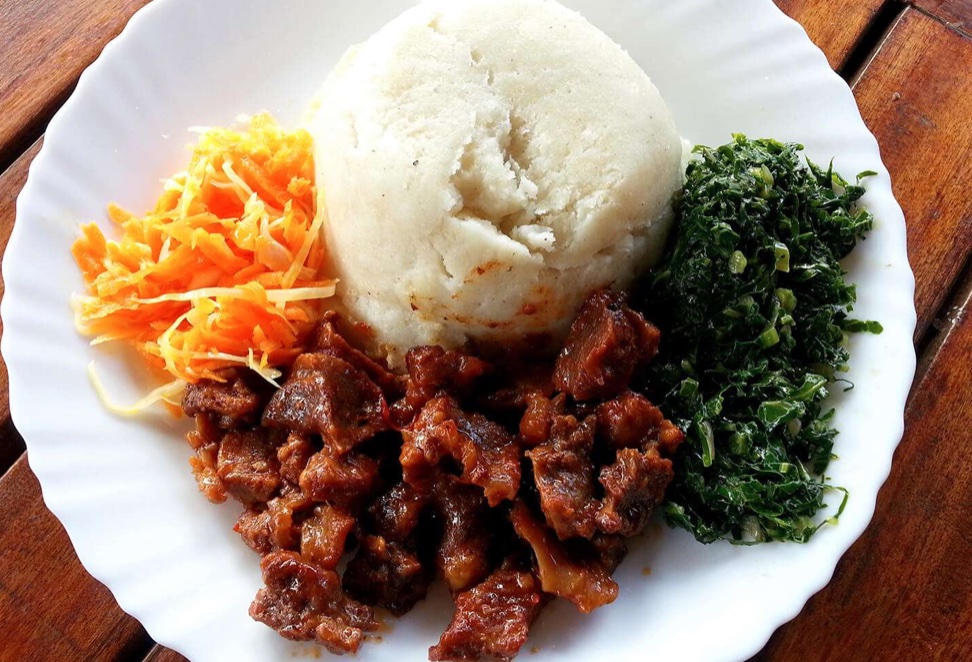
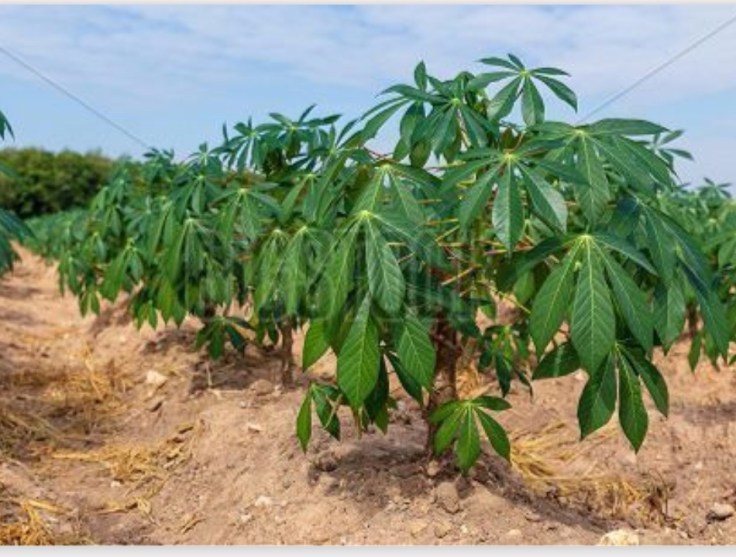
There is rice or ugali. Ugali is a stiff dough prepared with cornmeal, cassava flour, sorghum or millet. Most ugali in Tanzania is cornmeal based but in other East Africa countries and West Africa, cassava flour is favoured. It is tasteless stuff but fills the belly. Rice and cassava are important crops in Tanzania.
Ugali is a staple food with a big lump of this is placed on the side of the dish. Tanzanians eat with hands. A chunk of ugali is torn off the lump and rolled in to a bite sized ball then dipped into the plate of food to combine ugali with each mouthful of meat, veggies, or sauce. I have become accustomed to eating with my hands, a visceral and tactile feeling. Plus, it stops me from picking my nose.
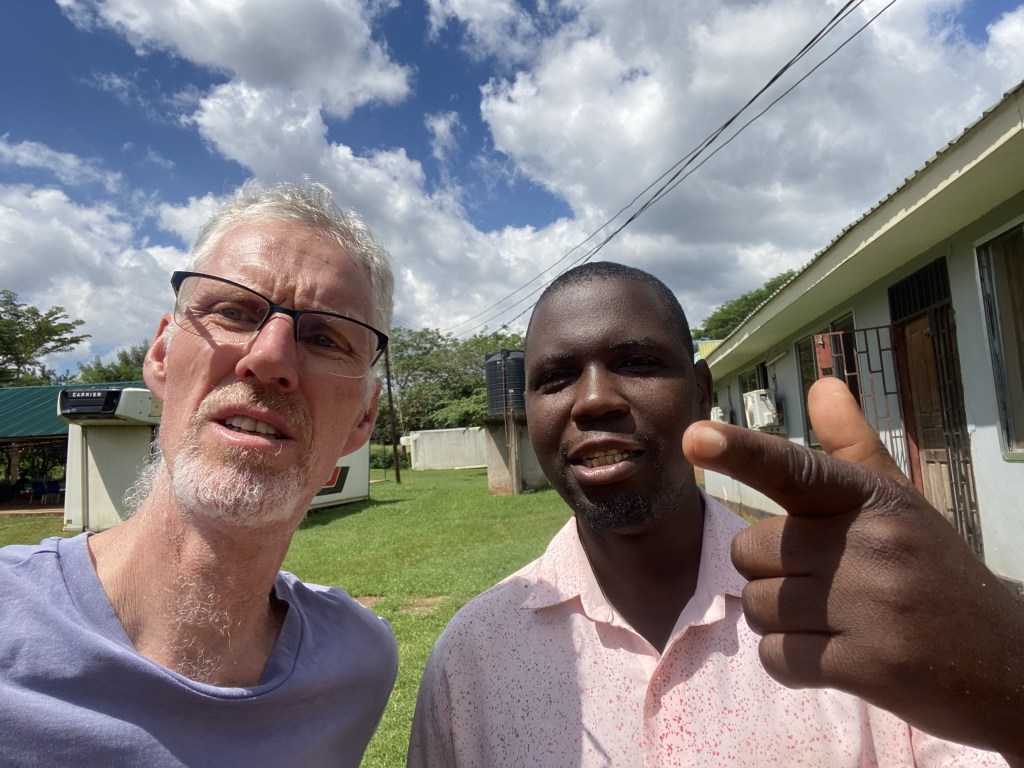
Recently I traveled 16 hours to the very south part of the Tanzanian coast where the UN has funded a flood relief project. I traveled with a work associate Mkushi, an engineer, in his car. It was a gruelling trip –200 km of the road had big washouts and destroyed bridges from a big storm that blew through in April. He played gangsta rap and gospel loudly, sung in Swahili for the entire trip.
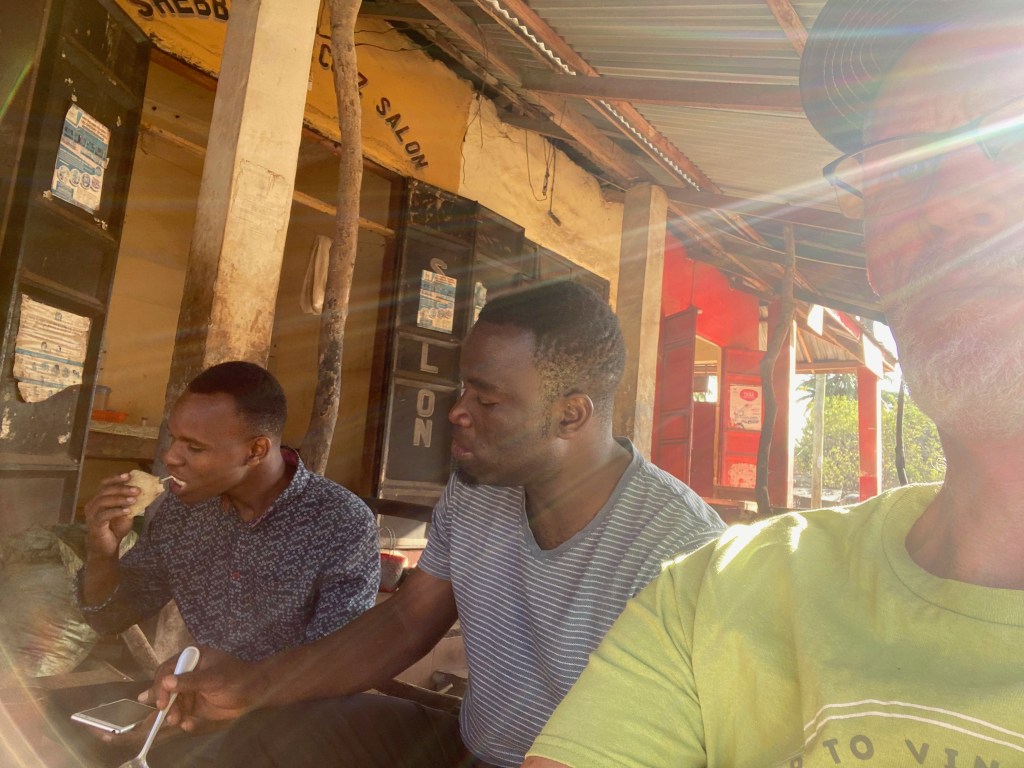
The next morning, we drove to a village affected by floods. On the way, we pulled into a village and under a corrugated metal roof we orded chai and chapati – a typical breakfast except Mkushi wanted meat. So, he got a big bowl of supu ya ngomno – beef broth with big grey chunks of boney meat. Meanwhile chickens were pecking under the table, a mother was rolling out chapatis with her crying baby wrapped in a kanga on her back.
The UN project is just getting started 2 weeks after I returned home by bus to Morogoro. Mkushi is still there where he is building components for the project, eating lots of meat and rapping gansta.












 Kilimanjaro Dreams